


About 60% of students report rereading highlighted or underlined material when they study. Only 18% see testing itself as a learning opportunity. Those numbers come from a survey of 472 university students by Kornell and Bjork, and they describe something more consequential than a behavioral quirk: a study culture organized almost entirely around the feeling of knowing rather than the act of recall.
Self-regulated learning research by Bjork, Dunlosky, and Kornell shows that learners typically use subjective fluency—how smooth and recognizable material feels—to judge their own readiness and stop studying when their notes feel familiar. The trouble is that familiarity is a weak proxy for what exams actually test. Retrieval practice, by forcing active reconstruction rather than passive recognition, directly confronts the gap between what feels learned and what can be produced under exam conditions—which is why it has moved from dismissal as rote memorization to being central in discussions of durable, exam-oriented learning.
Table of Contents
Rethinking Flashcards
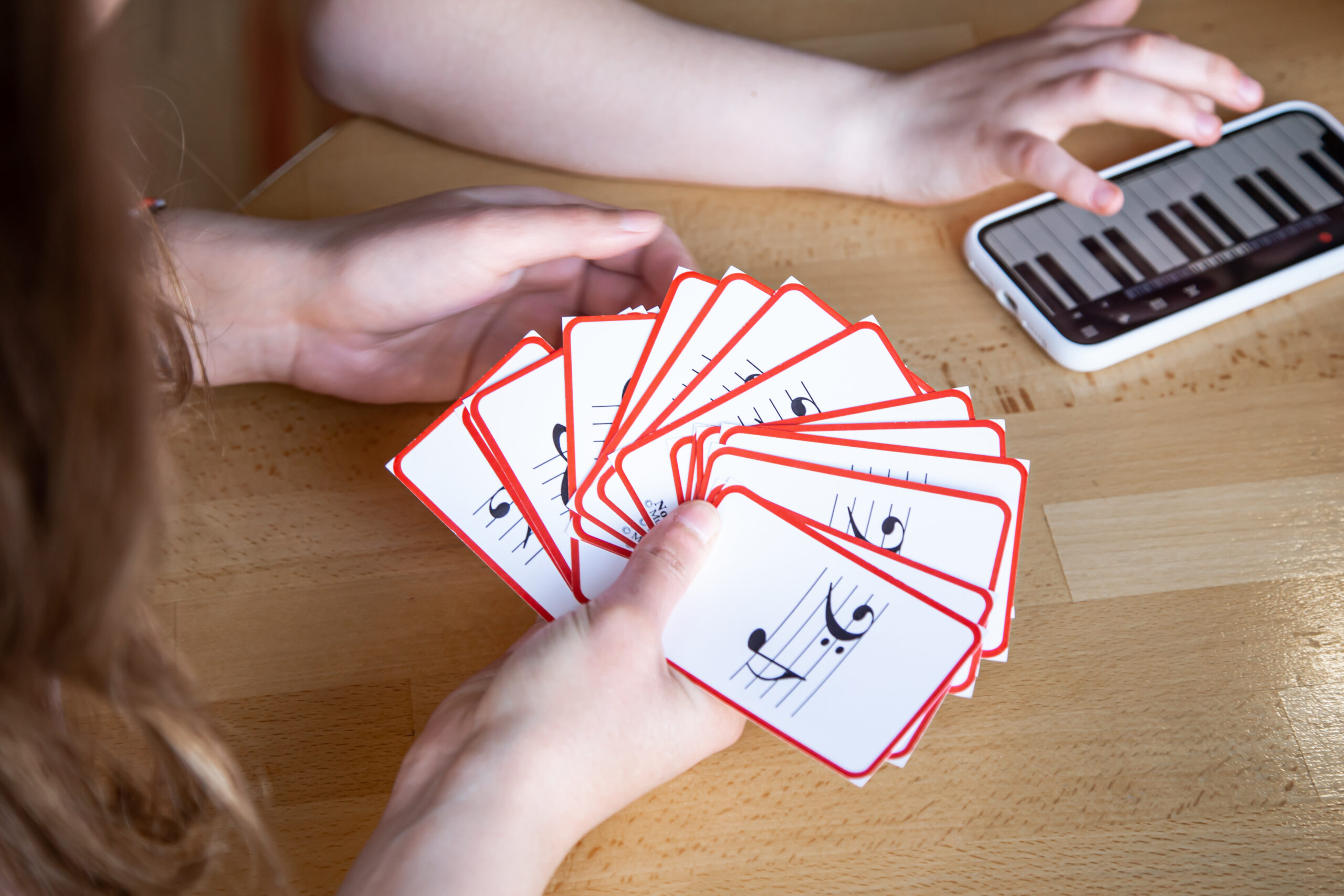
For many students and even some teachers, flashcards long signaled surface learning: vocabulary cramming, dates and formulas stripped of context, stacks of index cards to flip through the night before a test. This reputation placed them firmly in the low-status corner of study tools, especially in subjects that pride themselves on critical thinking and complex reasoning. Somewhat ironically, avoiding flashcards sometimes functioned as a credibility signal more than a learning strategy—a way of performing seriousness without necessarily improving exam outcomes.
The stigma persisted even as early laboratory studies on the testing effect showed that actively recalling information can support longer-term retention better than simply rereading it. Because flashcards were so closely associated with isolated facts, learners who wanted to appear rigorous sometimes chose more time-consuming alternatives—elaborate notes, dense annotations—that felt substantive but weren’t necessarily more effective.
As the science of learning matured, however, the underlying mechanism—prompting effortful retrieval—began to look less like a shortcut and more like a core cognitive process that could be applied well or badly. The question shifted from whether flashcards were inherently shallow to how their prompts, spacing, and feedback could be designed to support the kinds of thinking high-stakes exams actually demand.
Testing-Effect Research: Growth, Gains, and Gaps
Dozens of controlled studies comparing restudy with retrieval practice converge on the same result: taking practice tests or answering cued recall questions generally produces better delayed performance than rereading the same material. The advantage is sharpest when learners face criterial tests after a delay—exactly the condition exams create—where repeated exposure feels productive but yields weaker recall than having to reconstruct answers from memory.
A March 2026 perspective in npj Science of Learning synthesized this literature across 23,850 publications, identifying 1,774 relevant studies on the testing effect, retrieval practice, and test-enhanced learning. The authors report that applied and mixed-methods work has grown sharply over the last two decades while basic-mechanism research has declined since around 2012—a shift from proving the effect exists to exploring how it operates in actual classrooms and curricula.
Yet that same perspective highlights how little is known about whether testing effects generalize to learners with dyslexia and other disabilities. Thomas Wilschut, Florian Sense, and Hedderik van Rijn, researchers in the Department of Experimental Psychology at the University of Groningen, put the limitation plainly: “However, the evidence base remains limited: few studies are available, existing studies have very small sample sizes (7–16 participants) and most are conducted outside the classroom.” Those sample sizes and non-classroom settings make the existing evidence likely too constrained to support reliable conclusions about neurodiverse learners in authentic teaching contexts—which makes the design and testing of retrieval tools for diverse populations more urgent, not less.
Embedding Retrieval in Digital Study Workflows
One influential review of learning techniques by Dunlosky and colleagues rated rereading and highlighting as low-utility for durable learning, while practice testing and distributed practice rated high-utility across many conditions. That contrast clarifies what simply digitizing notes typically leaves unchanged: students continue the same passive review, now with a backlit screen instead of a highlighter. Unless the system structurally requires spaced retrieval, swapping paper for pixels is an upgrade that exams tend not to notice.
A quasi-experimental study in Frontiers in Education put this to a direct test with 60 English-as-a-foreign-language learners across six weeks. Students in the experimental group, who practiced via AI-generated contextual flashcards in Anki under a spaced-retrieval schedule, showed large gains in sentence-level fluency (pre–post: t(29)=14.52, p<.001; between-group post-test: t(58)=9.63, p<.001, d=2.48). Those results strengthen the case for contextualized prompts plus spaced retrieval, without by themselves guaranteeing comparable gains in other domains or long-term retention.
Research by Pan and collaborators adds a constraint worth taking seriously: across six experiments, user-generated digital flashcards produced better performance on memory tests—including a 48-hour delayed criterial test—than premade cards covering the same material. For AI-assisted tools, that pattern argues for keeping learners and teachers in the loop as active creators and editors, not merely consumers of ready-made decks.
That principle—learners must actively construct rather than passively consume—is precisely the challenge adaptive platforms try to operationalize. Brainscape, a flashcard-based study platform available on iOS and Android, uses an adaptive spaced retrieval system designed to help students focus on weaker material over time. It’s an arrangement most students would prefer to override—until the schedule reveals the difference between what they actually know and what they merely recognize. Educators and students can author their own decks or use AI tools to generate cards from existing teaching materials, with collaborative editing and class-wide analytics supporting cohort-level use. Together, these features push high-utility behaviors—frequent retrieval, spacing, and deliberate focus on gaps—into everyday mobile study, while still relying on users to select, edit, and explain the content they practice.
Aligning Recall to Exam Architectures and Access
Designing retrieval practice for high-stakes exams is harder than drilling isolated facts. Most exams ask students to relate concepts, apply ideas to data or cases, and carry out multi-step reasoning under time limits. A prompt that merely cues a term can rehearse labels while skipping the explanatory work that actually earns marks.
The International Baccalaureate Organization’s Global Politics guide captures this expectation directly: “When real-world examples and cases are used, candidates should not just state an example (as this is too limited) but also offer a proper explanation or contextualization, depending on the question asked.” Credit, in other words, depends on the explanatory move, not the name-drop. An exam-aligned retrieval resource therefore has to cue explanations and applications, not merely prompt recall of labels.
Access constraints add a different kind of problem. During COVID-era school closures, Pew Research Center reported a digital “homework gap” in the United States—some students lacked reliable home internet or a computer, a disparity more pronounced among lower-income students—and that gap was enough to block participation in schoolwork entirely. The mechanism applies directly to digital retrieval and exam-prep platforms: even carefully calibrated content cannot deliver its benefits when the infrastructure required to reach it isn’t there.
Multi-device delivery addresses part of that problem, though not all of it. The Revision Village app, available on web and mobile, illustrates how broad platform reach can extend access to exam-calibrated retrieval practice. Its syllabus-aligned, exam-style question banks and timed practice papers are developed by experienced IB educators and structured to cue the explanations and applications those assessments reward—combining exam-alignment with the kind of device flexibility that matters when a phone is the only available screen. For students without stable connectivity at all, of course, the question of which revision platform to use is somewhat beside the point; which is precisely why exam-alignment and access-alignment need to be treated as a pair, not a sequence. Even so, the 2023 UNESCO Global Education Monitoring report and OECD analyses of student internet use both stress that technology’s educational impact is incremental and uneven, and that inequalities in how students benefit can persist even when access is widespread.
Engineering Retrieval Systems for Diverse Learners
Flashcards and practice questions have come a long way from their reputation as rote drilling tools—laboratory work on the testing effect, a growing body of classroom research, and digital platforms that automate spaced recall have collectively helped move retrieval practice to the center of discussions about exam-oriented learning. What that shift has not yet delivered, as recent syntheses make clear, is equally strong evidence for learners with disabilities, particularly when available studies are small, often conducted outside classrooms, and therefore difficult to generalize from.
The priority now is less to re-establish that the testing effect exists and more to engineer retrieval systems that are both assessment-aligned and inclusively validated—designing workflows that mirror high-stakes exam demands, embedding spaced recall into everyday study, and testing those designs with diverse learners in real courses. Scale and sophisticated algorithms help. Without careful attention to exam demands and to who actually gets to benefit from them, though, they risk entrenching the very preparation gaps retrieval practice is supposed to close.